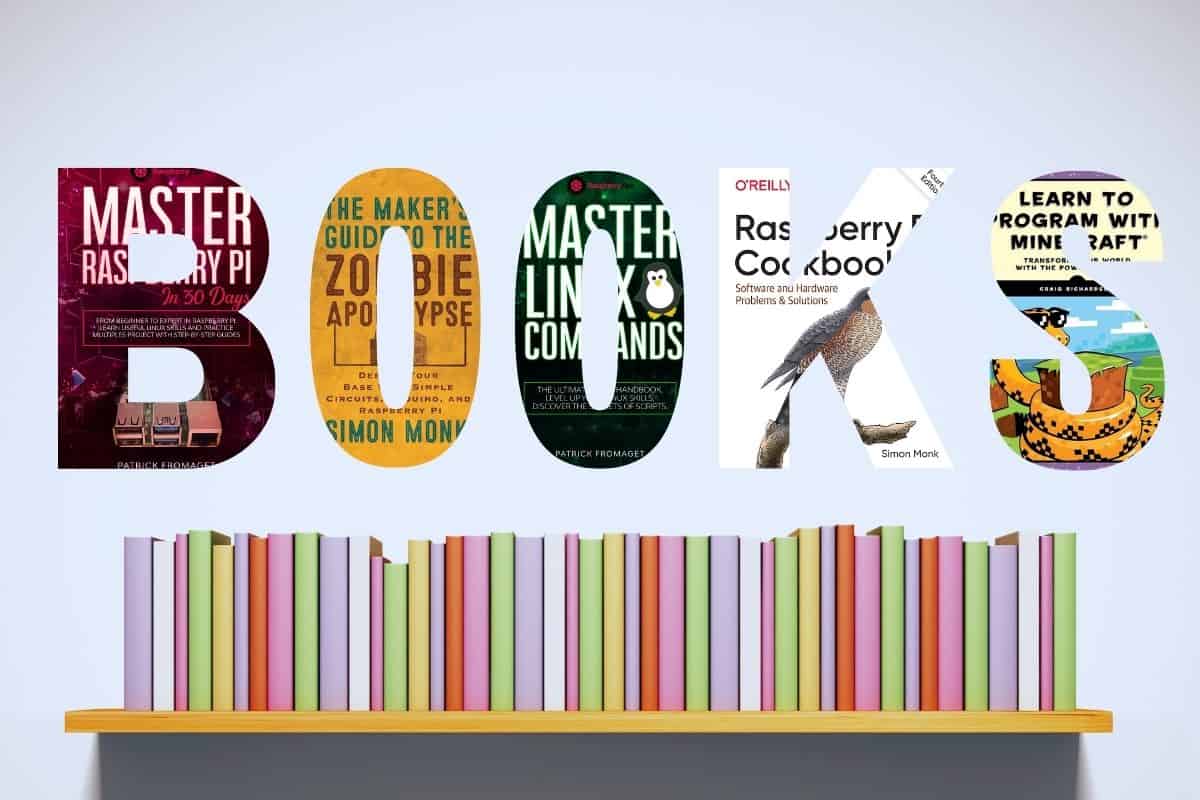
21 Best Raspberry Pi Books for Beginners
The Raspberry Pi is a fascinating device, with many different projects and types of activities available. It can be challenging to get started, either as a whole or in a new area like programming or electronics. I’ve read a lot of things about the Raspberry Pi and programming, including many books.
In this article, you’ll find those that I think deserve a place on your bookshelf. While some good books are obvious choices, sorting them by preference is more personal taste than actual truth, so I decided to sort them by category instead.
All the books listed here are very good, you won’t be disappointed. Feel free to use the table of contents below to go directly to the theme you’re interested in.
If you need help getting started on Raspberry Pi, I have an entire course to guide you through your first steps. I’ll help you use the perfect hardware, plug everything in and install your first system. You’ll also do your first projects with me, just to make sure you are ready for the next level. Get all the information on this page if you are interested.
General help for beginners

Master Raspberry in 30 days (Bonus)
Become an expert in one month!
I add it to this list as a bonus because it’s my book, but it’s probably the best buy to help you discover the Raspberry Pi as a whole (especially if you like this website).
If you are a beginner, the idea is to start with the basics and learn a new thing each day, step-by-step. If you already know a few things, you can skip the first chapters and continue reading and experimenting as soon as you are not sure to master something.
There are also many detailed projects and homework, which allows you to learn by practicing rather than only reading.
You can find all the details on this page of the website. You’ll love it.
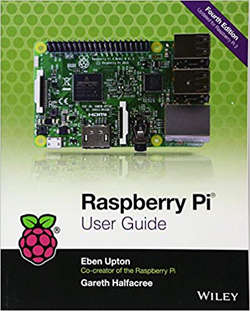
Raspberry Pi User Guide
Learn the Raspberry Pi from the experts!
The first of this list is not a big surprise. It’s simply the Raspberry Pi user guide, written by Eben Upton (Raspberry Pi creator) and Gareth Halfacree (Pi guru).
This book will provide you with a complete overview of the Raspberry Pi: hardware, commands, programming (scratch, python, Minecraft), and electronics (GPIO ports, camera, add-ons).
This is a must-have for every Raspberry Pi beginner.
Check the comments on Amazon, they are all saying it’s a fantastic book.
Raspberry Pi For Dummies
Get your slice of Raspberry Pi
Here is a classic collection in any theme you want to know better, and it’s also true for Raspberry Pi. “For dummies” is a well-known collection for beginners, it’ll not disappoint you.
In this book, you’ll find a general overview of Raspberry Pi: getting started, Linux introduction, programming with Scratch and Python and even some projects to discover all the possibilities.
This book is available on Amazon here.
For a gift to your kid, or if you want to play Raspberry Pi with them, there is also a specific edition for kids on this page.
Raspberry Pi Cookbook
Software and Hardware Problems and Solutions
This one is probably THE book for any Raspberry Pi owner, it’s a great reference. Be careful, however, as this book is over 400 pages long, and it might not be the easiest one to start with. But if you are motivated enough, would you need another one? Not sure.
Here is the summary of this bible:
- Set up your Raspberry Pi and connect to a network.
- Work with its Linux-based operating system.
- Program Raspberry Pi with Python.
- Give your Pi “eyes” with computer vision.
- Control hardware through the GPIO connector.
- Use Raspberry Pi to run different motors.
- Work with switches, keypads and other digital inputs.
- Use sensors to measure temperature, light and distance.
- Connect to IoT devices in various ways.
- Create dynamic projects with Arduino.
Raspberry Pi Cookbook is available on Amazon.com.
Exploring Raspberry Pi
Fundamental engineering principles
If you are lost in all these new words and abbreviations, request my free Raspberry Pi glossary here (PDF format)!
Download now
Another reference here with this 720-page book about all Raspberry Pi aspects. Its content is similar to the previous book, with more details about everything. You’ll learn how to use each part (hardware and software) of your Raspberry Pi and how to get the best of them.
You’ll maybe go faster on system commands/languages, but deeper on the electronic part as well, so it could be a better book for a creator rather than a programmer.
“Exploring Raspberry Pi: Interfacing to the Real World with Embedded Linux” received a lot of good comments on Amazon (check this link).
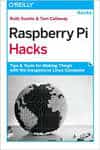
Raspberry Pi Hacks
Get your slice of Raspberry Pi
The last one for this general section is “Raspberry Pi Hacks: Tips & Tools for Making Things with the Inexpensive Linux Computer”.
I put this one in “General help” because it’s not only on one topic, but it may not be a book for a complete beginner.
It gives you some tips on how to make the most out of your Raspberry Pi. You’ll learn how to optimize the Pi configuration, how to build a cluster, and things like that. This book will not help you plug the Raspberry Pi the first time, but to get further with it after understanding the basics.
Check this book on Amazon.com.
Not sure about which book to get? Here are some free beginner-friendly resources I have on the website:
- 27 Essential Raspberry Pi Tips Every Beginner Should Know
- Beginner’s Guide: How To Install a New OS on Raspberry Pi
- Which Raspberry Pi Model Should you Buy: A Complete Guide
Programming skills
Now you have what you need for general help. We can move to the best books about programming on Raspberry Pi.
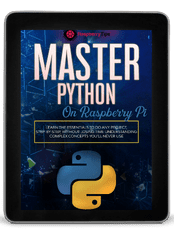
Master Python on Raspberry Pi (Bonus)
Do more with your Raspberry Pi

Join Our Community!
Connect, learn, and grow with other Raspberry Pi enthusiasts. Support RaspberryTips and enjoy an ad-free reading experience. Get exclusive monthly video tutorials and many other benefits.
Learn moreYep, that’s another book that I wrote and added here as a bonus for you.
This book is perfect for Raspberry Pi users who want to learn Python without spending too much time on theory. It’s designed to get you using Python in real-life projects quickly, without needing years of schooling or reading a huge book.
The idea is simple: you don’t have to be a Python expert to start doing cool stuff with your Raspberry Pi.
The book starts by making coding easy to understand by using everyday examples. You’ll get how coding works and how it’s similar to things you already know. Then, you’ll jump into fun, practical projects.
Don’t worry about your current skill level or past attempts at coding. This book is here to help you learn fast and have fun doing it!
Interested? Get all the details there.
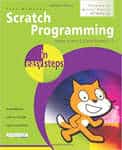
Scratch Programming in easy steps
Takes you from scratch to Scratcher
Scratch is a basic language to learn how to code; it’s the perfect language for a beginner or a kid.
This book will help you to introduce this language and understand how code works to create things on Raspberry Pi.
I love the way this book is presented and illustrated. It has practical sheets and is easy to follow. Each page brings a new tutorial with pictures and other information in the margin, like tips or important points. It’s perfect for beginners, especially teenagers.
On Amazon, you can look inside and discover a few pages to better understand what I’m saying.
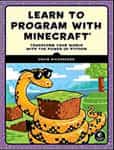
Learn to Program with Minecraft
See Minecraft in a whole new light
Minecraft is the children’s favorite game and an ideal way to get them to learn how to code while having fun. This book follows this idea with a fun cover and will introduce simple Python basics with the Minecraft game.
For each lesson, there are three parts:
- Introduction with the theory about the new notion (ex: set variables).
- Examples of how to code this notion in Python (ex: variables syntax).
- Practice with a Minecraft example (ex: teleport the player anywhere).
You can find this book on Amazon.
If you want another book that plays with Minecraft on Raspberry Pi, you could try this one:
Adventures in Minecraft, which is similar.
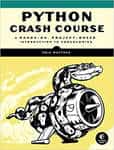
Python Crash Course
Introduction to Programming
We saw two books about programming for young people, but this one fits best for an adult.
It’s closer to a reference book (720 pages for this one) and written more classically, but it remains a great one on this list.
What I like about this book is its organization into two parts:
– In the first part, you’ll learn all the Python basics (variables, conditions, loops, etc …).
– In the second part, go into practice and see what you learned from the first part.
This is an original book you’ll also find on Amazon, perfect if you want to deepen your skills.
And if you can’t find the right book for you, here are some tutorials about programming you can get for free here:
- Should You Learn Linux or Python first?
- How to Learn to Program in Python with a Raspberry Pi?
- How To Create A New Python File In Terminal On Raspberry Pi
It's a free PDF guide containing every Raspberry Pi Linux command you should know!
Download now
Projects ideas
Some of you may prefer to learn new skills with concrete examples and by practicing on projects. This is what you’ll find in this part, the best books with project ideas to practice directly on Raspberry Pi.
If you are lost in all these new words and abbreviations, request my free Raspberry Pi glossary here (PDF format)!
Download now
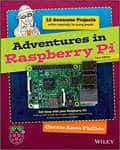
Adventures in Raspberry Pi
Build cool Raspberry Pi projects
This one could have been in the programming section because it’s mainly about that. But the book is organized through ten projects that you have to build to learn everything.
They describe this book for the young public, but I think anyone could appreciate it.
You’ll learn skills in various projects about music, Minecraft and games.
At the end of this book, you’ll have a good knowledge about the Pi, like Scratch and Python programming, Minecraft interactions and GPIO pin usage.
Adventures in Raspberry Pi is available on Amazon.
If you like this kind of book, there are several in the same collection (we previously saw Adventures in Minecraft for example).
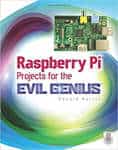
Raspberry Pi Projects for the Evil Genius
Fun projects for the Raspberry Pi!
With this awesome title, Raspberry Pi Projects for the Evil Genius, Donald Norris helps you discover all the Raspberry Pi features, through 12 specific projects:
- LED blinker
- MP3 player
- Camera controller
- Bluetooth robot
- Earthquake detector
- Home automation controller
- Weather station
- Home security controller
- RFID door latch
- Remote power controller
- Radon detector
This book is 250 pages long but will teach you a lot of things about Raspberry Pi that you could apply to your projects.
Check the price on Amazon and to see more details about the content.
You might be interested in these tutorials on the website:
- How to Read and Write RFID Tags With Raspberry Pi
- The Best Python GUI Libraries for Raspberry Pi to Try Out
- The Raspberry Pi GPIO Pinout: Diagram & Explanation
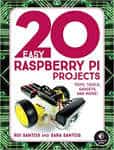
20 Easy Raspberry Pi Projects
With visuals and simple step-by-step instructions.
Here is another list of projects you can follow to learn new skills on your Raspberry Pi.
This book shows you projects by various themes, like LED, displays, sensors, cameras, games and web apps.
“20 Easy Raspberry Pi Projects” brings you 20 EASY projects, so it couldn’t be more suitable for a beginner than other books on this list.
For example, with the LED project, the author introduces electronic circuits notions and theory about LED, not directly related to Raspberry, but something you need to understand before starting the project.
20 Easy Raspberry Pi Projects: Toys, Tools, Gadgets, and More! is available on Amazon.com.
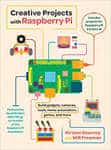
Creative Projects with Raspberry Pi
35 projects carefully selected for you
If you are looking for more original projects to try at home, you won’t be disappointed with this book: Creative Projects with Raspberry Pi.
It includes more complex projects, mixing systems, electronics and DIY stuff. For example, you’ll learn how to build a Rubik’s cube resolver, a portable games console or even a robot in Croc shoes.
What I like in this book, is that they take projects to an advanced stage. For example, one project is to build an Internet monitor. In most of the books, you’ll only get the script code to do this. In this one, they build a box for the Raspberry Pi, with LEDs showing the current status in real-time. It’s the perfect gift for all DIYers.
Make: Sensors
Monitor the physical world
Makezine.com is a well-known website for project ideas for makers. They also created a book collection for their readers and “Make: Sensors” is one of their books.
In this one, you’ll learn how to use any kind of sensor on the Raspberry Pi: Movement, Smoke, Touch, etc. Note you’ll also find projects for Arduino in this one.
You can find this book on Amazon.com (check the price here).
And feel free to browse books from the same source (Makezine), as they produce great books.
DK Workbooks: Raspberry Pi Projects
Get kids building exciting projects.
And this is the last in this category: DK Workbooks: Raspberry Pi Projects.
It may be closer to a magazine at first glance, with only 40 pages, but you get only the essential information and it gets straight to the point.
This book is written for young people, with basic projects.
So maybe not the best for an engineer, but a must-have for any young beginner.
This book is available on this page.
You could also find similar formats on any topic from the DK store.
By the way, if you’re looking for new project ideas, here are some great sources of inspiration you should check:
- All The Best Raspberry Pi Project Ideas (with links)
- 25 Awesome at-Home Raspberry Pi Project Ideas
- 16 Original Project Ideas for the Small Raspberry Pi Zero
It's a free PDF guide containing every Raspberry Pi Linux command you should know!
Download now
Want to chat with other Raspberry Pi enthusiasts? Join the community, share your current projects and ask for help directly in the forums.
Other good books
In this part I’ll show you other books that may not teach you directly how to use your Raspberry Pi, but more about his story and his integration in a wider area.
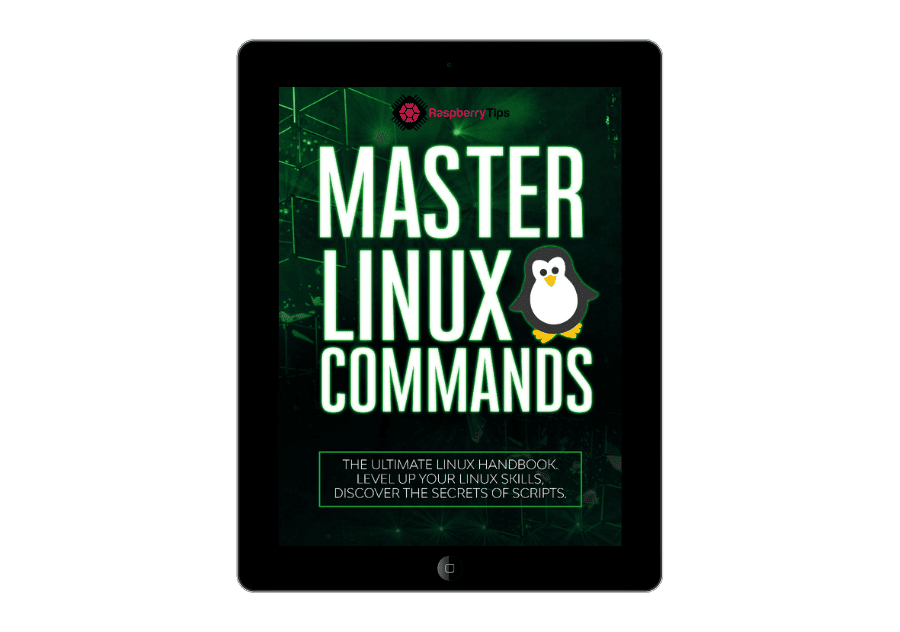
Master Linux Commands (Bonus)
Level up your Linux skills
Here is another book that I wrote. It’s not focused on the Raspberry Pi directly, but rather on getting efficient with Linux in general (which will help a lot if you’re a Raspberry Pi user).
This book is a must-have for anyone who wants to get good at Linux, even if you’re starting from scratch. It’s called “Master Linux Commands” and is available as an e-book or paperback.
The cool thing about this book is that it turns the confusing world of Linux commands into something easy to understand. It’s perfect if you often feel lost looking at the black screen of a Linux server, or if online tutorials seem like they’re written in another language.
This book makes you confident and independent, so you won’t need to rely on Google, online forums or other people to understand what you’re doing on Linux.
You can download it there (or get the ELITE pack to receive the paperback edition).
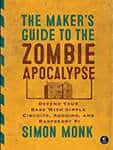
The Maker’s Guide to the Zombie Apocalypse
An essential survival tool.
I love the style of this book: The Maker’s Guide to the Zombie Apocalypse.
This will teach you Raspberry Pi (and Arduino) skills while telling you a story about a Zombie invasion.
You need to set up projects to protect yourself from the Zombie invasion: use Morse code, open and close doors remotely, use cameras and smoke detectors, etc.
This is an original book that you will probably enjoy if you dislike learning classically.
This awesome book is available here.
Basic Security Testing with Kali Linux
Ethical Hacking platform
Ok, this one is not directly about Raspberry Pi, but you could apply any notion learned through this book to a Raspberry Pi.
In the first part, you’ll learn about Kali Linux, the tools it provides, and how to use them. At the end of the book, you’ll find an entire chapter about the Raspberry Pi and how to install Kali on it.
If you don’t know anything about Kali Linux, read more about it in my post: 15 steps to start with Kali Linux on Raspberry Pi.
And, if you want to know more, you can buy the book on Amazon.
Building the Web of Things
Implement scalable, flexible, and open IoT solutions
Internet of Things (IoT) is a vast topic, and not necessarily around Raspberry Pi. In this book, you’ll learn a lot of things about IoT: scalable solutions, protocols and architecture, web development with new languages like NodeJS.
So, what’s the link with other books? Authors will often refer to the Raspberry Pi to illustrate what they are teaching you. You’ll also learn things about the Raspberry Pi, even if you already mastered it.
Maybe not a book for a total beginner on Linux systems or software engineering.
But to discover Raspberry Pi in an IoT context for experimented IT engineers, it could be the best option from this list.
Building the Web of Things: With examples in Node.js and Raspberry Pi is available on Amazon.
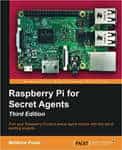
Raspberry Pi for Secret Agents
Transform your Pi into a neat spy gadget
I really like the title and the story that this book tells us.
Like with the Zombie book, I appreciate when authors take time to find a way to captivate us. It’s easier to read and progress in this context.
In this exciting book, you’ll learn a lot, from basics (Pi story, models, configuration) to great projects like intrusion detection, GPS tracker or 3G connection.
This book exists in several versions. To get the latest update click here.
That’s it, you have my 20 preferred books about Raspberry Pi. I hope this will help you choose one that fits you the best, or for a gift (other gift ideas related to Raspberry Pi here).
Whenever you’re ready, here are other ways I can help you:
The RaspberryTips Community: If you want to hang out with me and other Raspberry Pi fans, you can join the community. I share exclusive tutorials and behind-the-scenes content there. Premium members can also visit the website without ads.
Master your Raspberry Pi in 30 days: If you are looking for the best tips to become an expert on Raspberry Pi, this book is for you. Learn useful Linux skills and practice multiple projects with step-by-step guides.
The Raspberry Pi Bootcamp: Understand everything about the Raspberry Pi, stop searching for help all the time, and finally enjoy completing your projects.
Master Python on Raspberry Pi: Create, understand, and improve any Python script for your Raspberry Pi. Learn the essentials step-by-step without losing time understanding useless concepts.
You can also find all my recommendations for tools and hardware on this page.